What Father Loss Can Do to a Child's Identity
Father loss can leave a child with questions about identity, belonging, safety, faith, and who they are becoming. This article speaks from lived experience about the particular wound father loss can create, while reminding caregivers that children may carry those questions quietly long before they can explain them.
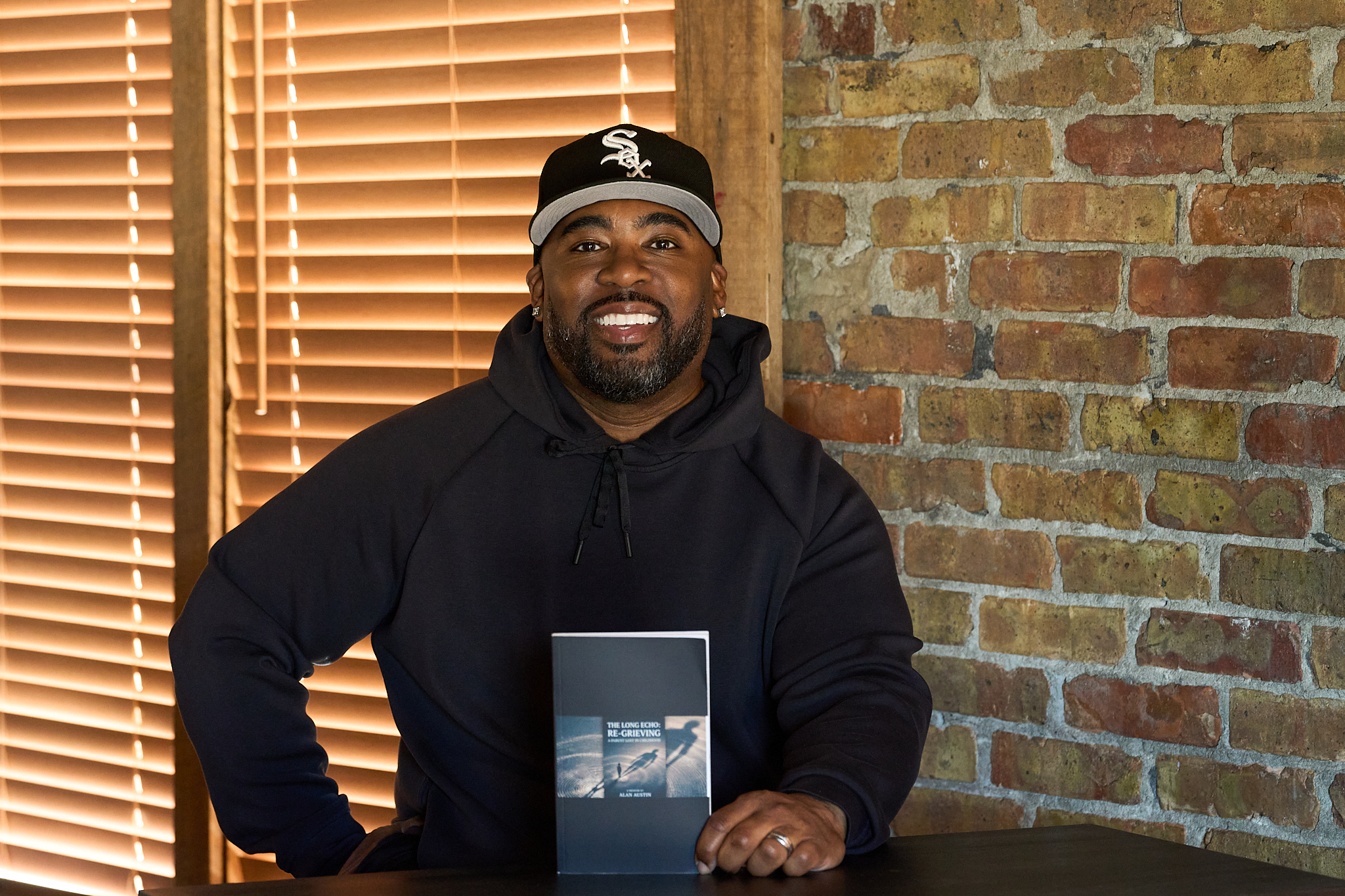
Written by Alan Austin
Alan lost his father in childhood. He writes from lived experience so grieving children can be recognized early.
Last reviewed September 28, 2026
Prefer to listen?
Narrated by Alan Austin.
Quick Answer
Lived ExperienceFather loss leaves a child with questions about identity, belonging, safety, faith, and who they are becoming, often long before they can ask those questions out loud. Name the absence with care, reinforce belonging, and let the child remain a child.
Key Takeaways
- Father loss carries its own shape: questions about identity, belonging, safety, faith, and who the child is becoming.
- Those questions often live quietly, long before a child has the language to ask them.
- A quiet child is not an adjusted child. Watch for identity questions surfacing sideways in behavior, relationships, and milestones.
Educational, not clinical. The Long Echo Project is not therapy, diagnosis, clinical care, or emergency support. Alan speaks from lived experience, authorship, fatherhood, cultural understanding, and long-term reflection. Research may be referenced where appropriate but does not replace licensed mental health care.
The loss of a father does something particular to a child.
That does not mean is worse than mother loss. Pain does not need to compete with pain. But different losses leave different questions behind, and father loss carries its own shape.
I know that wound personally.
My father was not simply someone I loved. He was part of how I was supposed to understand myself. His absence touched my identity, my sense of safety, my questions about manhood, my faith, and the way I understood family.
As a child, I did not have language for any of that. I only knew he was gone. Later, I began to understand that his death did not leave one empty space. It created questions that followed me into every stage of life.
Father Loss Has Its Own Shape
When a father is gone, the child does not only grieve the person.
They grieve the role.
A father can be many things in a child's life: protection, identity, example, discipline, presence, belonging, memory, and name. Even when a father is imperfect, complicated, absent in certain ways, or not fully understood by the child, the loss can still become part of how that child sees themselves.
For me, became a quiet question underneath other questions.
Who was I supposed to become without him?
What part of me came from him?
Who would have helped me understand manhood?
Would I have felt safer if he had lived?
Those questions were not always loud. Some did not arrive until years later. Childhood does not always give you the ability to understand the size of what has been taken. Sometimes the meaning catches up later.
That is part of the long echo.
The Identity Question
A child who loses a father may begin carrying identity questions before they can explain them.
The question may not sound like grief. It may show up as guardedness, distance, anger, silence, anxiety, or a need to prove something. A child may wonder where they belong in the family now. They may feel disconnected from pieces of themselves they never had time to understand.
For a son, can press hard against the question of manhood.
Not every boy needs the same kind of fathering. Not every man teaches manhood well. But when a father dies, the child loses the chance to know what might have been learned from him, corrected by him, challenged by him, or understood through him.
That absence can become a mirror with no reflection.
I had to grow up with pieces missing from the picture. People could tell me stories. They could show me photos. They could say who my father was.
But stories are not the same as presence. A photograph cannot answer the questions a child grows into.
The child may still function. They may still laugh, learn, obey, and move forward. Underneath that movement, identity may be forming around absence.
Manhood Without a Map
can make manhood feel like something a boy has to figure out by instinct.
That can be dangerous because instinct is often shaped by pain. A boy may start building his idea of strength from whatever is available around him.
Silence may look like strength. Anger may look like strength. Emotional control may look like strength. Distance may look like strength too.
Some of those traits may help him survive for a while.
They can also trap him.
I learned early how to carry myself carefully. I learned how to watch, how to measure rooms, how to hold certain feelings where no one could reach them. Much of that was praised or misunderstood as maturity. Looking back, I can see how much of it came from father loss and moving through the same life.
A child without language will often become fluent in behavior.
That is why caregivers have to look beyond whether the child seems strong. Strength may be real, but it may also be covering fear, confusion, loneliness, and pressure the child never asked to carry.
Belonging After the Family Changes
A father's death changes the structure around a child.
The household may shift. Roles may change. Adults may become overwhelmed.
Family members may try to protect the child by not talking too much. People may assume the child is too young to understand, too quiet to need answers, or too composed to need attention.
Inside that silence, belonging can become uncertain.
A child may wonder where they fit now. They may feel the missing parent in family gatherings, holidays, school events, birthdays, and ordinary moments that expose the empty space. The absence becomes part of the room, even when no one says his name.
Belonging anxiety does not always announce itself as sadness.
It may show up as withdrawal. It may appear as watchfulness. A child may cling harder, pull away faster, or become difficult to read. Some children become careful not to need too much because they sense the adults around them are already carrying enough.
That kind of quiet can be mistaken for personality.
It may be grief.
Faith and the Father Wound
can also carry spiritual weight.
For a child raised around faith, the death of a father can create questions that feel too dangerous to say out loud. God may become confusing. Prayer may feel unanswered. Adults may offer phrases meant to comfort, but some phrases can leave a child feeling even more alone.
A grieving child may wonder why God allowed the death.
They may wonder whether protection failed.
They may feel anger and then guilt for feeling anger.
I carried questions like that. I did not always know what to do with them. Faith was present in my life, but grief made faith complicated. When a child loses a father, especially through violence or , the idea of a loving and protective God can become difficult to understand.
Caregivers should not rush past that struggle.
Telling a child “God needed him more” or “everything happens for a reason” may sound faithful to the adult, but it can land painfully in a child's mind. The child may hear that God chose the loss, wanted the loss, or valued the dead parent more than the child who still needed him.
A better response leaves room for honesty.
“You are allowed to have questions.”
“You are allowed to be angry.”
“I do not have an easy answer, but I will not leave you alone with the question.”
That kind of language does not solve the spiritual wound. It makes the wound less lonely.
What Caregivers Can Say
A child who has lost a father needs more than general comfort.
They need belonging reinforced. They need the father's absence named with care. They need permission to ask questions at different ages, not only when the death first happens.
A caregiver might say:
“Your father's death changed a lot, but it did not remove your place in this family.”
Or:
“You may understand different parts of this loss as you get older. We can keep talking about him.”
Or:
“People may not always know what to say about your father, but his absence matters. Your questions matter too.”
Those words give the child room to keep growing without pretending the missing place is small.
Caregivers should also be careful not to turn the child into a replacement adult. A son should not have to become “the man of the house” because his father died. That phrase may sound respectful, but it can place a weight on a child that belongs to grown people.
Let the child remain a child.
Responsibility may come with time. Grief should not be forced to mature them before they are ready.
The Wound That Changes Shape
I do not like pretending every wound heals cleanly.
Some losses change shape. They become easier to understand. They may become less sharp in certain seasons. A person can build a life, love people, raise children, grow in faith, and still carry the absence.
That has been true for me.
I have lived more than forty years with the loss of my father. The grief is not the same as it was when I was a boy. I am not the same either.
But the absence did not disappear. It followed me into manhood, marriage, fatherhood, faith, and the way I understand my own children.
This is why early recognition matters.
A caregiver may not be able to remove the wound, but they can help the child stop carrying it without language. They can make room for questions. They can speak honestly about the father. They can protect the child from becoming too strong too soon.
What Recognition Can Change
The Long Echo Project exists to help caregivers, adult survivors, and communities recognize before silence becomes the child's main way of surviving.
deserves that kind of recognition.
Not because it is the only kind of pain. Not because every child experiences it the same way. It deserves attention because it can reach deeply into identity, belonging, faith, safety, and the child's understanding of who they are becoming.
I wish someone had known how to name that for me.
A child who loses a father may not know how to ask for help with identity. They may not know how to explain what his absence is doing to their sense of self. They may only learn how to carry the missing place quietly.
Caregivers cannot give the child everything death took.
But they can offer language, steadiness, and a reminder that the father's absence is real, the questions are allowed, and the child still belongs.
What It May Mean
Lived Experience- The child is grieving the role as well as the person: protection, example, belonging, memory, and name.
- Identity questions may surface sideways as guardedness, distance, anger, silence, or a need to prove something.
- For a son, manhood can feel like something to figure out by instinct, built from whatever strength looks like around him.
- Faith can become complicated when a protective God did not protect the father.
What To Do
Practical Guidance- Reinforce belonging. Remind the child that the father's death did not remove their place in the family.
- Name the father's absence honestly and keep talking about him as the child grows.
- Give permission for questions and anger, including questions about faith.
- Protect the child from becoming a replacement adult or 'the man of the house.'
What To Say
Practical Guidance“Your father's death changed a lot, but it did not remove your place in this family.”
“You may understand different parts of this loss as you get older. We can keep talking about him.”
“You are allowed to have questions. You are allowed to be angry. I do not have an easy answer, but I will not leave you alone with the question.”
What To Avoid
Practical Guidance- Do not say 'God needed him more' or 'everything happens for a reason.' A child can hear those as God choosing the loss.
- Do not tell a son he is now the man of the house.
- Do not assume a quiet, composed child has nothing to work through.
- Do not rush past spiritual struggle with tidy answers the child did not ask for.
When To Seek More Help
ResearchIf identity questions, withdrawal, or faith struggles deepen into lasting anxiety, depression, or isolation, a licensed counselor or grief support group can help. Adult survivors revisiting father loss may also benefit from grief-informed therapy.
Next Step
Keep going with these related readings.
Sources & Further Reading
National Child Traumatic Stress Network
Dougy Center
Child Mind Institute